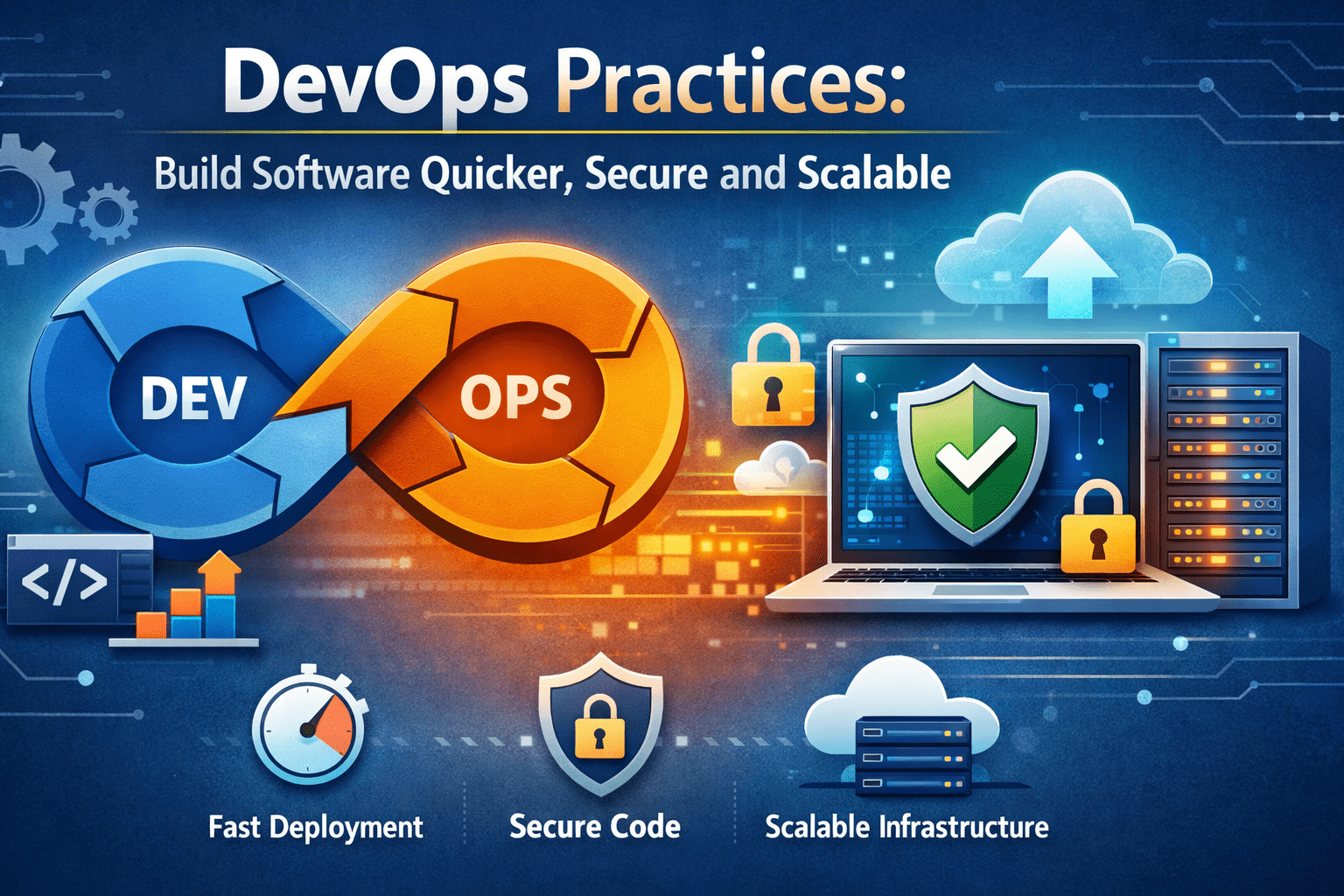
Today, with the pace of development, the adoption of devops practices is not an option anymore. Whether you are building on a startup product or running an enterprise framework, DevOps combines development and operations to deliver with greater velocity, serve consistently, and collaborate more effectively.
This guide explains the most critical devops best practices, including essential strategies, tools, and devops security best practices to take action on today.
What Are DevOps Practices?
The practices of DevOps include various approaches, methods, and even worldviews which promote better cooperation between development (Dev) and operations (Ops) professionals.
The goal is simple:
- Consistent delivery
- Speedy delivery
- Excellent software
Accordingly, teams do not work in a silo; rather, they cooperate through the entire lifecycle — including:
- Coding and testing
- Deployment
- Monitoring
Why DevOps Matters
Here’s why organizations have glommed onto DevOps like never before:
- Faster time-to-market
- Improved software quality
- Better team collaboration
- Reduced deployment failures
- Continuous feedback and improvement
Core DevOps Best Practices
Here are some DevOps best practices to try out:
Continuous Integration (CI)
Continuous Integration (CI) is an automated process of testing the changes in code and merging them on a frequent basis.
Benefits:
- Detect bugs early
- Improve code quality
- Faster development cycles
Continuous Delivery & Deployment (CD)
CI/CD pipelines are leveraged to automatically deliver code into production.
Key advantages:
- Faster releases
- Reduced manual errors
- Consistent deployments
Infrastructure as Code (IaC)
IaC is an abbreviation for Infrastructure as Code, which implies that instead of having servers configured manually, you can manage infrastructure using the codebase.
Popular tools:
- Terraform
- AWS CloudFormation
Why it matters:
- Repeatable environments
- Version-controlled infrastructure
- Faster scaling
Monitoring and Logging
The famous quote states, you cannot improve what you cannot measure. Monitoring: this is how you pay attention to system performance
Best practices:
- Use centralized logging systems
- Set up alerts for failures
- Monitor application and infrastructure metrics
Automation Everywhere
DevOps is driven by Automation.
Automate:
- Testing
- Deployment
- Infrastructure provisioning
This not only reduces human errors but also saves time.
Collaboration and Communication
It’s not tools — DevOps is culture.
Encourage:
- Cross-team communication
- Shared responsibilities
- Transparency in workflows
DevOps Security Best Practices
Consider Security as a New Afterthought It is essential that security be part of DevOps (DevSecOps) practices.
Shift Security Left
Embed test security in the process early on—not at the end.
Why:
- Early detection of vulnerabilities
- Lower cost of fixes
Automated Security Testing
Adding security tools in CI/CD pipeline
Examples:
- Static Application Security Testing (SAST)
- Dynamic Application Security Testing (DAST)
Secrets Management
Never hardcode credentials.
Use:
- Environment variables
- Secret managers like Vault
Least Privilege Access
Keep user and service permissions to the minimum necessary.
Benefits:
- Reduced attack surface
- Better compliance
Regular Updates and Patch Management
March 2, And Open Source SystemUpdated Dependencies.
DevOps Practices Comparison Table
| Practice | Description | Benefit |
|---|---|---|
| Continuous Integration | Merging & testing code together frequently | Identifying bugs faster: Integrating developers work easily, and applying code changes regularly reduces testing and raises errors quickly |
| Continuous Deployment | Automates the release process | Faster delivery: CI/CD pipelines can be used by developers to deliver less complex codes in lesser time |
| Infrastructure as Code | Manage infra via code • # of desired env | Consistency & scalability |
| Monitoring & Logging | Track system performance | Fewer delays to resolve issues |
| Automation | Reducing manual tasks | Efficiency Reliability |
| Security Integration | Secure dev life cycle | Reduced vulnerabilities |
Common Mistakes to Avoid
Teams make these mistakes (with the best intentions, mind you):
- Ignoring security until production
- Overcomplicating CI/CD pipelines
- Lack of proper monitoring
- Not investing in team culture
- Manual deployments
Top DevOps Practices One Needs to Get Started
If you’re coming fresh to all of this, don’t try to do everything at once.
Start small:
- Set up a basic CI pipeline
- Automate testing
- Introduce version control for infrastructure
- Gradually add monitoring and security
Consistency matters more than complexity.
Suggested Reads
- Should You Learn MERN Stack Development in 2026?
- AWS Outage Explained: How an AI Coding Tool Triggered
- Devops Roadmap
FAQs on DevOps Practices
But what are the best practices for devops?
Some of the key devops practices are CI/CD, Infrastructure as Code, Monitoring and Automation.
How do devops best practices improve productivity?
Devops best practices reduce manual work, promote collaboration between different teams and automate repetitive tasks that free up their time to focus on innovation.
DevOps security best practicesWhat is DevOps security?
The security best practices for DevOps are:
- shift-left security
- automation of your security testing
- secure secrets management
- least privilege implementation
Is DevOps only applicable to large enterprises?
The last misconception is that DevOps only for big companies: No DevOps helps every one so if you are a startup, mid size team or enterprise its helpful. Small optimizations can lead to massive efficiency gains.
What is the lead time for DevOps adoption?
That said, It really varies from organization to organization, but what we typically see is benefits within weeks of teams beginning to adopt baseline DevOps practices (in the right place).
Final Thoughts
By implementing the best DevOps practices you can do a hell of a lot which is very good for your teams for building and delivering software in an absolutely reusable manner.
The best part is one can get a much quicker release with lesser bugs and a more hardened system by doing so automation, collaboration, and security.
Stay small, iterate constantly, and gradually evolve more sophisticated devops best practices—along with robust devops security best practices—in order to become more competitive in modern technology sector.
7 thoughts on “DevOps Practices: Build Software Quicker, Secure and Scalable in 2026”