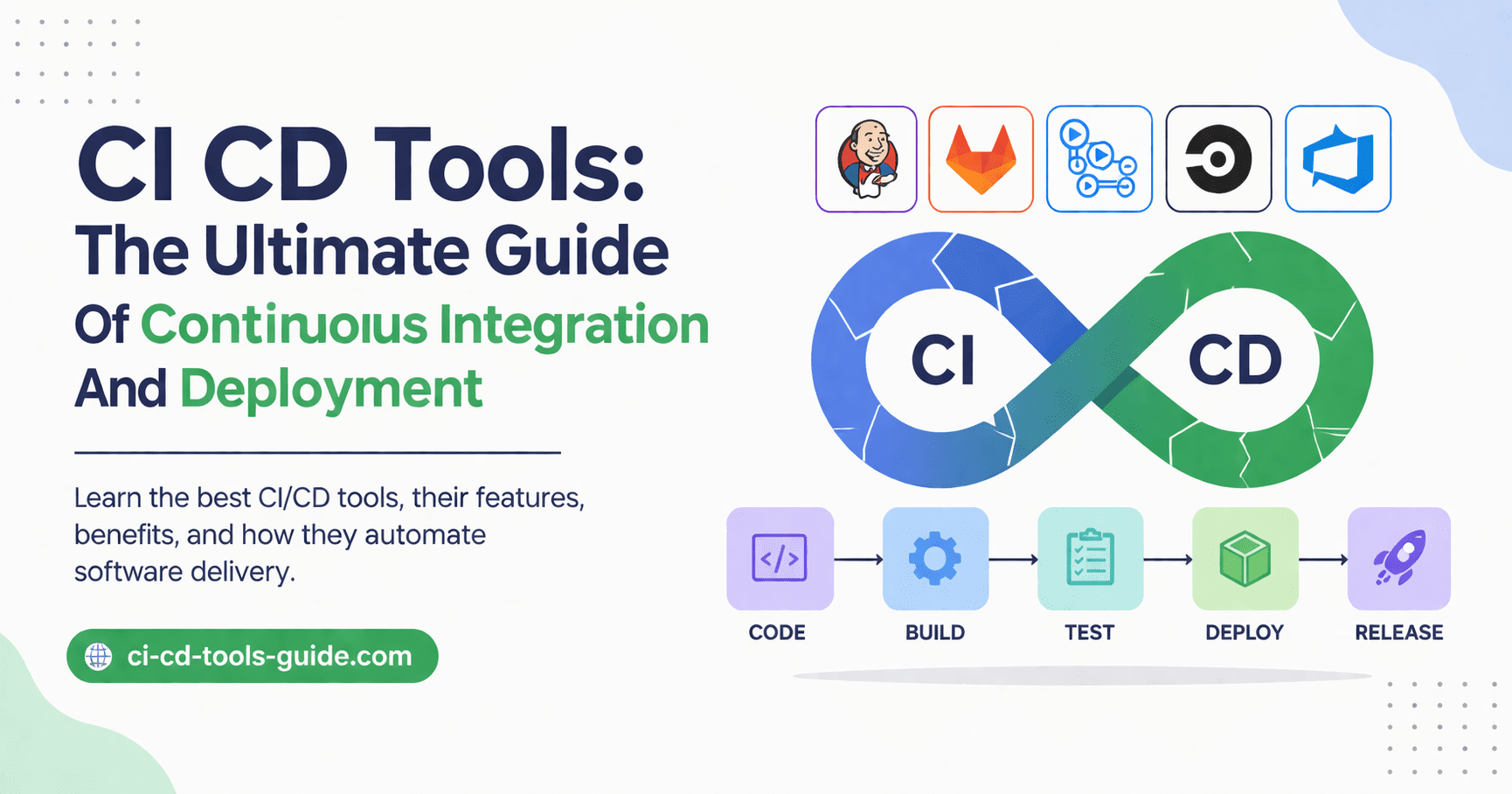
Introduction (CI CD Tools)
Everything in modern software development is speed and reliability by using ci cd tools. Teams are now expected to deliver high-quality applications faster than ever without compromising on the functionality of the existing applications.
Therefore, when you hear someone mentioning CI CD, he/she is probably speaking about Continuous Integration and Continuous Deployment/Delivery. The practices make the development process easier through the automation of code build, test, and deployment.
You will find out in this CI/CD tools guide what the best CI CD tools in the market, how they work and some of the basic CI CD practices that can enhance your working procedure.
What is CI CD?
Continuous Integration (CI) is an understanding of Continuous Integration.
Continuous Integration (CI)
A development approach in which developers add their code additions to a central repository. Any modification will cause the automatic build + tests.
Key benefits of CI:
- Early identification of bugs
- Rapid feedback among the developers
- Improved collaboration
- Reduced integration issues
Continuous Deployment (CD) Introductions
Continuous Deployment (or Delivery) automates the phase of publishing. When the code has passed all the tests, it is automatically deployed to production or staging environments.
Benefits of CD:
- Reduced time to market
- Reduced manual errors
- Consistent deployments
- Better user experience
The best CI CD Tools in 2026
This article will discuss the best CI CD tools that can be used by developers. As a photograph, a comparison of some of the popular tools:
Best CI/CD Tools Comparison Table
| Tool name | Type | Best fits | Key features |
|---|---|---|---|
| Jenkins | Open-source | Custom pipelines | Plugins, flexibility, scalability |
| GitHub Actions | Cloud-based | GitHub users | Simple configuration, built-in workflows |
| GitLab CI/CD | Integrated | Full DevOps lifecycle | Built-in CI/CD, security tools |
| CircleCI | Cloud/Hybrid | Fast builds | Parallelism, caching |
| Travis CI | Cloud | Open-source projects | Easy setup |
You can also improve deployment pipelines using Docker containers and modern microservices deployment platforms.
The Working of CI CD Tools
Step-by-Step Workflow
- Code Commit
Code is pushed into a repository by developers. - Build Process
The application automatically gets built by CI CD tools. - Automated Testing
Unit tests, integration tests, and others are run. - Deployment
In case the test results are good, the code is automatically deployed. - Monitoring
We follow up on the performance and post-deployment errors.
Many teams integrate CI/CD with cloud providers like AWS DevOps and repository platforms such as GitHub Actions.
CI CD Best Practices
CI/CD is not a tool, it is doing this correctly. And here we will have some established CI CD best practices:
Keep Builds Fast
- Optimize test execution
- Use caching mechanisms
- Run parallel jobs
Automate Everything
- Automation of testing, builds, and deployments
- Reduce manual intervention
Equal the Playing Field (with Everyone)
- Do use version control systems, e.g. Git
- Avoid various sources of codes
Test Early and Frequently
- Author unit and integration tests
- Test each commitment
Monitor and Rollback
- Track application performance
- Facilitate fast roll-back systems
Developers working with frontend frameworks should also learn about Next.js vs React and React Native CLI for better deployment workflows.
The advantages of using CI CD Tools
The reasons why Developers Love CI CD
- Faster development cycles
- Continuous feedback
- Improved code quality
- Better team collaboration
- Reliable deployments
Difficulties in the CI CD Implementation
CI CD tools have several benefits; nevertheless, they do not lack difficulties:
- Complex initial setup
- Team learning curve
- Managing pipeline failures
- Infrastructure costs
Hack: Begin with a smaller, less risky scale and expand on it.
Security and dependency management are also important, especially when handling issues like vulnerable dependencies in Axios.
CI CD Pipeline sample
Simple Pipeline Structure
- Source Stage
- Build Stage
- Test Stage
- Deploy Stage
These procedures and activities allow the automated and smooth implementation of software.
Conclusion / Final Thoughts
The primary aspect of in software development is CI CD tools. Being aware of what is CI CD and applying it in an appropriate manner may have a strong influence on productivity and quality of code.
By considering the right tools as well as CI CD best practices, teams are able to develop automated workflows that reduce errors at any stage of the development and enable them to produce quality software in a timely manner. CI CD is not a luxury anymore, be it an individual developer, or in a giant organization.
For more technical guidance, developers can also explore the official Docker Documentation.
Suggested Reads
- DevOps Practices: Build Software Quicker, Secure and Scalable in 2026
- What is a Docker Container Beginners and Developers Type Guide to Understand Container in 2026
- Free Options to Deploy Microservices App
- AWS Outage and AWS Downtime
FAQs
What is CI CD?
CI CD is a process that automates the build, test and deploy process to enable development to be faster and more dependable.
What are the excellent CI CD tools?
Some of the popular CI CD tools include Jenkins, GitHub Actions, GitLab CI/CD, CircleCI and Azure DevOps, to mention a few.
What are some of the CI CD practices?
Best practices include the use of automation, quick builds, continuous testing and monitoring, and keeping a single source of truth.
CI CD exclusively work in large teams?
CI CD tools are not restricted to large teams, but small teams and individuals can use them as well.
What is the time consumed in deploying CI CD?
In the case of small projects, it can take a few hours to days.
4 thoughts on “CI CD Tools: Best Practices”